I have a new article in a volume I edited with Adam Benkato for the Journal of the Royal Asiatic Society. More details on the volume will follow soon, but my article is already available on the Journal’s FirstView:
This article examines the extent of the concluding section (Y 41) of the Yasna Haptaŋhāiti in light of the manuscript evidence and the section’s divergent reception in a Middle Persian text known as the “Supplementary Texts to the Šāyest nē Šāyest” (Suppl.ŠnŠ). This investigation will entertain the possibility of an alternative ritual being described in the Suppl.ŠnŠ. Moreover, it argues that the manuscripts transmit the ritual text along with certain variations and repetitions while the descriptions of the extent of each section preserve the necessary boundaries of the text as a textual composition or unit.
What’s life like for a Zoroastrian today? A short piece by Dina Katgara (@dinakatgara) published in The Daily Californian. دینا کاتگارا درباره زندگی به عنوان یک زرتشتی یا پارسی در عصر جدید.
The following text first appeared on the blog of the Edinburg University Press on 4 August 2020. The original is here. I am reproducing it here without any textual alterations except some minor formatting.
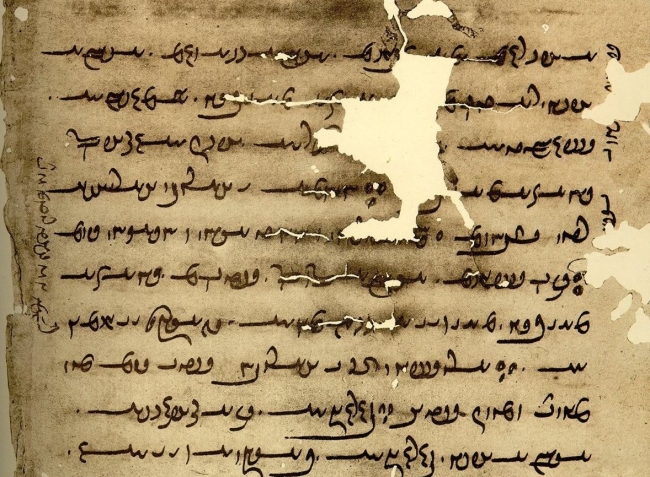
Y 35 in manuscript J2 (1323 CE)
On translation and exegesis in the Zoroastrian religious tradition
Zoroastrianism, now a minority faith in Iran and India, is an Iranian religion with a complex textual transmission reaching back to the remote antiquity.
The oldest layers of the surviving Zoroastrian texts are in Avestan language and commonly dated to the middle of the second millennium BCE. Exact dates and circumstances of composition, however, remain uncertain, so that little is known about the socio-political context from which these texts emerged. After two millennia of oral transmission, the texts were finally committed to writing, at a time when the language must have no longer been in active use.
The hindustantimes has another article on the Navjote I wrote about yesterday. This one provides a bit more information about other contentious Navjotes. And it briefly mentions gender disparity as one of the arguments that seems to be dividing the Parsi community:
The issue has divided the community, with one section stating the children cannot be initiated into the faith because their father is of a different faith. On the other hand, reformist groups have called the older practice discriminatory towards women.
Those acquainted with Zoroastrianism, at times called the Good Religion, and the Parsi community know of the heated debate that surrounds conversion. People often believe that today’s Zoroastrianism or the Parsi community do not allow or frown upon conversion into the religion. Another fiercely debated issue is the acceptance into the Parsi community of children from mixed marriages, particularly when the father is not a Zoroastrian.
There is a documentary of 27 minutes on Zoroastrian/Parsi attempts of finding love through community events. The clip I posted previously is part of this radio documentary. You need to be registered and signed in to be able to listen to the documentary.
A short 3 minutes video by @BBCWorld on Zoroastrians, it seems mainly Parsis (no distinction made in the video), and the “World Zoroastrian Youth Congress” where the youth meet and connect in an attempt to preserve the growth of the community.
Pir-e Sabz, Zoroastrian pilgrimage site in central Iran. Photo: Courtesy of Kaiyan Mistree. Copyright: UiB.
The University of Bergen (Norway) and the Shapoorji Pallonji Institute of Zoroastrian Studies at SOAS, University of London, offer this autumn (23–27 September 2019) a short course on Zoroastrianism. This free course takes place in Rome and offers international students an opportunity to immerse themselves in the study of this religion with its rich history. The course is taught by Sarah Stewart (SOAS) and Michael Stausberg(Bergen) who will be joined by Jenny Rose (Claremont). Application deadline is 24 June 2019.
Another photo essay by Behrad Mistry, again from last year and over at the Ajam Media Collective.
The Zoroastrian New Year coincides with the Spring Equinox. It marks not only the beginning of the calendar, but the renewal of life in its perennial struggle with death. This annual milestone is an occasion for celebration, and involves a series of ritual arrangements and acts.
A commented photo essay from last year by Behrad Mistry over at the Ajam Media Collective.
The following is a photo essay by Behrad Nafissi Mistry. Born into the caste of Zoroastrian priests, Behrad is half Indian Parsi, half Iranian and is currently training to also serve as a priest. Behrad is a photo-journalist at Amordad Zoroastrian News Agency and Humans of Tehran. He holds a B.A. in English Literature and an M.A. in Comparative Literature from Shahid Beheshti University. This series will focus on Tehran’s Zoroastrian community and their practices before, during, and after Nowruz.
“Alt-Iranistik” has always been considered a small and exotic field, a so-called “Orchideenfach”. Despite its small size and the limited financial resources available for research, Alt-Iranistik is an unexpectedly vibrant field. The many job announcements of the past year will hopefully continue as a trend and create stable research and teaching environments for the many talented people active in the field. May there be more announcements like this: